Wednesday, 8 May 2013

Evaluation Question 2:-
What have you learned from your audience
feedback?
During the process of creating our product,
there were many stages where we decided to collect audience feedback. In
collecting the feedback, we learnt a lot about our product and ways to develop
and improve it.
When did you collect your feedback?
We collected feedback at various stages
while creating our product. Our first set of feedback came from our pitch of
initial ideas. From here we started to create our product and after showing our
first cut gained another set of feedback. We then got to the stage where we
decided to change our idea- in doing this; we pitched our new idea and the
prospect of change, to our classmates in order to gain another set of feedback
and opinions. After which, having gone with the concept of changing our product
completely- we pitched our new idea to the group, again collecting more
feedback. And finally, the majority of our feedback came from the completion of
our final product. In doing this, and gaining constant feedback throughout the
process of creating our product, it helped us to move onto the next step and
improve what we had as we went along.
Ok, so what feedback did you get from
pitching your original idea?
When first thinking of our product, we
pitched our initial ideas to the class in order to gain some feedback to help
us see whether people thought it would work or not. This helped us to gain an
idea of whether we felt it would be successful or not. In pitching our idea, we
grasped that our audience seemed to like the concept we were proposing. They
thought that it fit the genre and the style of music we planned to use. It
followed the stereotypes and conventions of both the artist and the genre well.
Our audience also thought it was clear that we had gained a clear knowledge of
the genre and artist through our research and planning which had benefitted us
when starting to think of ideas. This helped us see that we had a clear
understanding of the conventions of our chosen genre and of our artist’s
conventions.
What did your classmates say regarding your
first cut?
When we came to show our first cut to the
rest of the group, our timeline seemed to be very empty. Only when showing the
product, did we realise how little we actually had managed to complete. This
helped us see that editing was going to take much longer than we thought. The
ideas that we had put onto our timeline so far, had taken much longer to edit
and finalise than we originally had planned and therefore compared to other
groups in our class, we appeared to be behind. This helped us understand the
amount of effort that went into the post production. The group thought there
were some good ideas generally and that we were following on well from our
pitch. The general feel of the product was starting to come together and take
shape but there was obviously a lot of empty space. The pace of the product
appeared quite slow and as a result lacked interest. Here I learnt that our
video may not have been coming together as well as we imagined it would do. From
this point, I started to have doubts about our work and wondered whether or not
I was going to be happy with it.
What did you do from here?
From here, I began to look at how much we
had done, how much we still had left to do and our time scale. I debated whether
we had enough time to restart the product as a whole. In thinking this through,
I realised that if we wanted to change the existing idea, we would have to
refilm a lot of our footage anyway, meaning it would take just as long as
restarting. In learning this, I felt we were as well restarting the whole
product. I thought that a fresh idea would encourage us to work harder on our
product. Thinking we had to restart the whole thing now in a smaller time scale
would hopefully mean we would work much tighter as a group and more precisely
in order to achieve our set deadlines.
So what audience feedback did you gain next
and what did you learn from that?
In deciding to change the idea, we gathered
the class together and talked of changing our idea. We pitched to them why we
felt it wasn’t working as it was, what we needed to do to change the existing
idea and then what we would do with a completely new idea. In doing so, we
learnt our audience here were in mixed opinions as to what we should do, as of
the time scale and the amount of work we were creating for ourselves in
restarting. Until I said, I feel like the product has come to an end. It’s more
of chore working on it than for it to be something we enjoy doing. At this
point, our teacher immediately turned round and said start with a fresh idea
then. And from there the majority of our classmates agreed. They taught us that
perhaps a fresh idea would make the task seem more exciting and as a result
change our attitude towards working on it for the better.
How did you then go about gaining your next
set of feedback?
In deciding on changing our idea
completely, we went through the same process as our first idea. Once we had
come up with the initial ideas for this idea, we pitched our new ideas to the
group; again learning that other opinions is important when creating something
like this. We found the more different views you can get the better. Every
person sees things differently and as a result has a different view or opinion
on it. The group liked our idea- they said it followed the conventions of
Coldplay’s music very well. They also said that, where we had decided to go
against conventions of Coldplay’s stereotypes, it was obvious that we were
trying to oppose them and would work well if done properly. It was also
mentioned how we were following the conventions of our chosen genre well. In
listening to our peers, we found out that the general outcome was that, the new
idea sounded much more promising than the previous.
Was this the case? What was the outcome on
your final product?
We had a lot of feedback for our final
product, most of which is on our blogs. Generally the feedback was mostly
positive, however we also asked for constructive feedback in order to see what
we could improve on. As we asked such a large variety and amount of people for
feedback it was interesting to see so many comments and such varied responses.
From hearing all the positive things, we realised our product was very
successful and worked well. It suited the genre and the artist well. But at the
same time, we learnt that there were still things that could’ve been improved
and changed.
Evaluation Question 1:-
In what ways do your ancillary product use, develop or challenge conventions of real media products?
Thursday, 7 February 2013


Visual Brainstorm:-

After deciding on Clocks as our new song, we decided to create more of a visual brainstorm in order to gain more ideas and begin to put images in our heads.
Wednesday, 6 February 2013
Brainstorming Ideas:-
When originally deciding on our video and the ideas for the video footage; we, as a group, decided that our band were going to be Coldplay. From here we narrowed our song choices down to two.
These were:
-God Put A Smile Upon Your Face
-Clocks
In order to come up with some sparks and first ideas, we played the songs and noted down anything that came to mind. Whether it be particular lyrics, actions, instruments, shots or images.
After doing this for both songs, we came together to collect all of our ideas and went from there on deciding the final song and first 'formal' idea.
Here is my planning.


As my planning was only done in pencil, some sections may be difficult to read. So here is what is written down.
God:
guitar
'down' - positive ending - doesn't sound it.
drums - foot tap?
'line'
'time' - your time - guilt
beat - montage
chorus - 'ahh' - spinning?
sun - smile - happy
song = release of anger/ emotion
smile
male
vulnerable, feels helpless?
stuck/ trapped - can see out, can't get out
32 beat intro - voice over?
'nobody knows' - (image of small building, with trees)
(image of bird) - grace? birds - freedom - links to being trapped.
Clocks:
drums - Euan
piano - Claydon (Emma)
'lights go out' - BEV shot, B/O
'confusion' - montage
'tides' - sea, add sounds
clocks - time - running out, count down? - spinning, clock hands?
instrumental = montage
(clock image) - fades, overlays, visual ideas
'beg' - visual representation
time lapses (apple) - clock hands spinning - overlayed - different angles/speeds
LIGHTS
CLOCKS
violins - Jay, Laura, Bianca - formal dress
fade into song + ticking sound = voice over
These were:
-God Put A Smile Upon Your Face
-Clocks
In order to come up with some sparks and first ideas, we played the songs and noted down anything that came to mind. Whether it be particular lyrics, actions, instruments, shots or images.
After doing this for both songs, we came together to collect all of our ideas and went from there on deciding the final song and first 'formal' idea.
Here is my planning.


As my planning was only done in pencil, some sections may be difficult to read. So here is what is written down.
God:
guitar
'down' - positive ending - doesn't sound it.
drums - foot tap?
'line'
'time' - your time - guilt
beat - montage
chorus - 'ahh' - spinning?
sun - smile - happy
song = release of anger/ emotion
smile
male
vulnerable, feels helpless?
stuck/ trapped - can see out, can't get out
32 beat intro - voice over?
'nobody knows' - (image of small building, with trees)
(image of bird) - grace? birds - freedom - links to being trapped.
Clocks:
drums - Euan
piano - Claydon (Emma)
'lights go out' - BEV shot, B/O
'confusion' - montage
'tides' - sea, add sounds
clocks - time - running out, count down? - spinning, clock hands?
instrumental = montage
(clock image) - fades, overlays, visual ideas
'beg' - visual representation
time lapses (apple) - clock hands spinning - overlayed - different angles/speeds
LIGHTS
CLOCKS
violins - Jay, Laura, Bianca - formal dress
fade into song + ticking sound = voice over
Tuesday, 5 February 2013
DigiPak Inspiration:-
Here are some other Coldplay album covers that we looked at in order to gage a perception of what ours needed to look like;
Both of these album covers are very simplistic and empty. We decided to go against this convention for our album cover.
X & Y-

Parachutes-
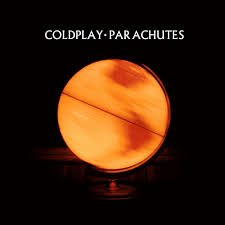
This album cover, we felt was too busy and colourful for the mood of our piece. The tracks on this album appeared to be a lot more upbeat compared to the songs featured on 'A Rush Of Blood To The Head.' Therefore we decided a more simple album cover would be better.
Mylo Xyloto-

Both of these album covers are very simplistic and empty. We decided to go against this convention for our album cover.
X & Y-

Parachutes-
This album cover, we felt was too busy and colourful for the mood of our piece. The tracks on this album appeared to be a lot more upbeat compared to the songs featured on 'A Rush Of Blood To The Head.' Therefore we decided a more simple album cover would be better.
Mylo Xyloto-

Monday, 4 February 2013
Completed Magazine Advert:-

Here is our completed Magazine Advert for the album 'A Rush Of Blood To The Head' by Coldplay.
After looking into previous adverts for Coldplay and conforming to their style, we tried to include as much as we felt was relevant to the genre and artist.
We decided to use actual reviews of the album and sourced these from http://www.rollingstone.com/ and http://www.nme.com/
Completed DigiPak:-
Here is our completed DigiPak design for the album 'A Rush Of Blood To The Head' - Coldplay.
- Which contains the single 'Clocks'

DigiPak Images:-
Front Cover;

Our front cover was chosen as we wanted to feature our performer on the album cover. We decided on a still shot from our music video in order to link the two together. In this shot, we liked the idea of the bright white tshirt on the plain black background. This creates a good contrast and shows the purity of our featured performer. The white tshirt links to the white text used, both of which are very plain conforming to the stereotypes of Coldplay. The angle of this shot shows the importance of our performer and the expression shows the meaning and intelligence behind the song.
Back Cover;

Our back cover breaks the typical conventions of Coldplay, as usually, their back covers do not contain an image. We have conformed to the stereotype by using a plain and simple font for the track listing however. For our back cover, we were more inspired by The Kooks 'Inside In, Inside Out' album cover- which linked the photos on the front and back cover. We liked this as we could use two different images of our performer from our video.
Left Cover;

Left Cover 2;

Inside Cover;

Inside Back Cover;

All four of our inside covers are non-specific photos that could link to any song on the album- making it general and relatable to the audience who may have listened to the album but not have seen the video. However, all are taken from our chosen song 'Clocks' in order to make them more specific to our song.
Planning:-
When planning our product, I suggested that we keep the shots simple as to keep with the other Coldplay videos. In keeping the shots simple, I stated that we would need a variety of angles and shots of the same thing in order to keep our audience engaged.
I came across another video on YouTube that I found very inspiring, coincidentally it also fitted with my idea of keeping the shots simple.
(link)
In discussion with my group over my idea, Maisie decided to notate some of the specific shots we could use. Here are a few ideas she came up with.
We tried to keep with these ideas, but also amended some shots.

Feedback:-
Firstly, we uploaded our final product to YouTube (www.youtube.com), so that people could view it and 'like' or 'dislike our product, and also leave comments; allowing audience feedback from a wide and varied audience.
However,
neither Maisie's YouTube channel (http://www.youtube.com/user/maisiehesketh?feature=mhee),
Tiffany's channel (http://www.youtube.com/channel/UCvu8087f37ZNemmpyo2XTOg?feature=watch),
or my own channel (http://www.youtube.com/channel/UClvZ1E1BJoYNJGgZwtkcyZA)
had enough subscribers for enough
people to see it and us to receive substantial audience
feedback.


Friday, 18 January 2013


New Locations:-
As the main feature of our film will be performance, we have concentrated on filming our actor (Jeff Leyland) miming the song in order for us to use this throughout our video. He was filmed in college, on the stage. We kept the curtains closed behind him so as to have a plain backdrop.
The Curtain on the stage we chose was a deep shade of red. We felt that the connotations of this colour fitted well. We liked the idea of strength, supporting our protagonist through his state of sadness, power, determination, passion and desire also fitted with this. It also added the idea of lust or love, suggesting that maybe there is alternative motives to his commitment and desire.

The Curtain on the stage we chose was a deep shade of red. We felt that the connotations of this colour fitted well. We liked the idea of strength, supporting our protagonist through his state of sadness, power, determination, passion and desire also fitted with this. It also added the idea of lust or love, suggesting that maybe there is alternative motives to his commitment and desire.
 Red
Red
Red is the color of fire and blood, so it is associated with energy, war, danger, strength, power, determination as well as passion, desire, and love.
Red is a very emotionally intense color. It enhances human metabolism, increases respiration rate, and raises blood pressure. It has very high visibility, which is why stop signs, stoplights, and fire equipment are usually painted red. In heraldry, red is used to indicate courage. It is a color found in many national flags.
Red brings text and images to the foreground. Use it as an accent color to stimulate people to make quick decisions; it is a perfect color for 'Buy Now' or 'Click Here' buttons on Internet banners and websites. In advertising, red is often used to evoke erotic feelings (red lips, red nails, red-light districts, 'Lady in Red', etc). Red is widely used to indicate danger (high voltage signs, traffic lights). This color is also commonly associated with energy, so you can use it when promoting energy drinks, games, cars, items related to sports and high physical activity.
Light red represents joy, sexuality, passion, sensitivity, and love.
Pink signifies romance, love, and friendship. It denotes feminine qualities and passiveness.
Dark red is associated with vigor, willpower, rage, anger, leadership, courage, longing, malice, and wrath.
Brown suggests stability and denotes masculine qualities.
Reddish-brown is associated with harvest and fall.
Pink signifies romance, love, and friendship. It denotes feminine qualities and passiveness.
Dark red is associated with vigor, willpower, rage, anger, leadership, courage, longing, malice, and wrath.
Brown suggests stability and denotes masculine qualities.
Reddish-brown is associated with harvest and fall.

The walls in the hall we chose to use were GREEN presenting a number of colour connotations. I liked the natural connotations, and the connotations of harmony; as they fitted with both the song's sound and the genre well. I also thought that the natural connotations fitted with the calm and tranquility of Coldplay.

Although we liked both of these colours and their connotations, we did not want them to be linked too strongly with our characters- in order for our audience to create their own storyline. Therefore, we liked the idea of keeping these colours in our location, and the shots without being too central to the mise-en-scene.
http://www.color-wheel-pro.com/color-meaning.html
 Green
Green
Green is the color of nature. It symbolizes growth, harmony, freshness, and fertility. Green has strong emotional correspondence with safety. Dark green is also commonly associated with money.
Green has great healing power. It is the most restful color for the human eye; it can improve vision. Green suggests stability and endurance. Sometimes green denotes lack of experience; for example, a 'greenhorn' is a novice. In heraldry, green indicates growth and hope. Green, as opposed to red, means safety; it is the color of free passage in road traffic.
Use green to indicate safety when advertising drugs and medical products. Green is directly related to nature, so you can use it to promote 'green' products. Dull, darker green is commonly associated with money, the financial world, banking, and Wall Street.
Dark green is associated with ambition, greed, and jealousy.
Yellow-green can indicate sickness, cowardice, discord, and jealousy.
Aqua is associated with emotional healing and protection.
Olive green is the traditional color of peace.
Yellow-green can indicate sickness, cowardice, discord, and jealousy.
Aqua is associated with emotional healing and protection.
Olive green is the traditional color of peace.
Common connotations of green;
nature, growth, grass, hope, youth, inexperience, sickness, health, Islam, spring, Saint Patrick's Day, money (US), greed, and envy

Although we liked both of these colours and their connotations, we did not want them to be linked too strongly with our characters- in order for our audience to create their own storyline. Therefore, we liked the idea of keeping these colours in our location, and the shots without being too central to the mise-en-scene.
Because of this, I chose to make some of the shots in our video black and white when editing.
Subscribe to:
Posts (Atom)